
Blog
Most used surgical instruments in hospitals

By Lenox Surgical Instruments Editorial Team · Updated 2026-07-29
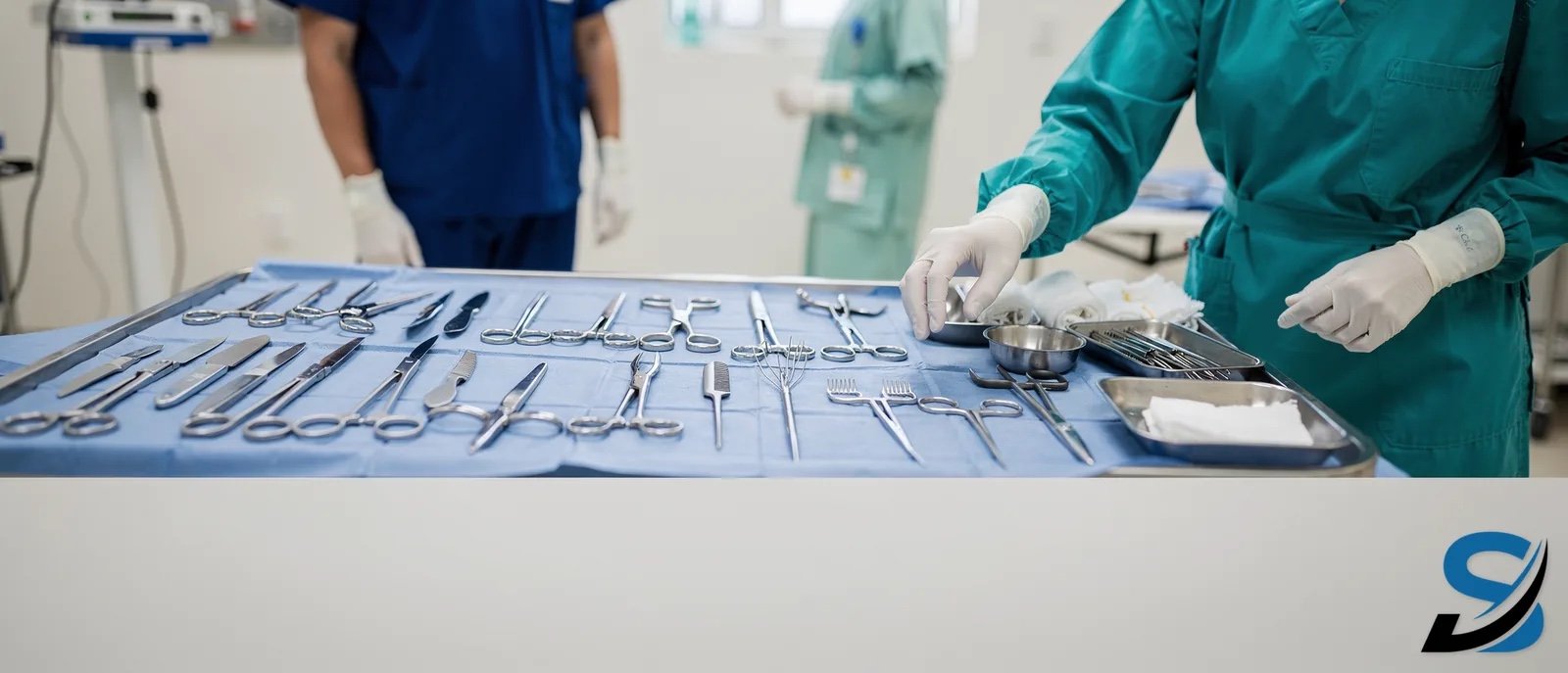
Surgical instruments include scalpels for cutting tissue, forceps like Kelly forceps for grasping, hemostats for clamping blood vessels, retractors for holding incisions open, needle holders for suturing, scissors such as Metzenbaum scissors for dissection, and suction devices for removing fluids—each designed for precise roles during operative procedures.
Scalpels, forceps, scissors, retractors, and clamps form the core categories of surgical instrument names and uses. Scalpels use interchangeable blades—such as the #10 for large skin incisions, #11 for sharp angled cuts, and #15 for precise smaller incisions—while forceps and clamps grasp tissue, and retractors hold incisions open during procedures.
Surgical instrument categories include cutting tools like scalpels with #10, #11, and #15 blades, plus ratcheted and non-ratcheted forceps, scissors, retractors, and clamps. Lenox Surgical Instruments manufactures these under ISO 13485 and CE certification standards, supplying reusable, precision-engineered options for incisions, tissue grasping, dissection, and exposure during procedures.
What Are the Main Types of Surgical Instruments?
Four core categories define a working surgical inventory: cutting and cautery tools, grasping instruments, retracting devices, and specialty sets built for a single procedure type. Lenox Surgical organizes its full catalog around this logic, grouping dental instruments, surgical instruments, hospital hollowware, and surgical sets into distinct product lines that procurement teams can order separately or as bundled kits. cite-1
Within the surgical instruments line, the categories that OR staff handle most often include surgical forceps (ratcheted and non-ratcheted), surgical scissors, retractors, scalpels, clamps, and laparoscopic tools. Each subtype solves a different mechanical problem in the field.
Ratcheted forceps — lock closed for sustained grip on tissue or vessels
Non-ratcheted forceps — offer finer, adjustable pressure for delicate handling
Surgical scissors — cut tissue or suture with precision-ground edges
Retractors — hold incisions open for visibility and access
Scalpels and clamps — provide initial cutting and vessel occlusion
Does Instrument Type Depend on Reusability?
Sourcing decisions split along a second axis entirely separate from function: reusable versus single-use design. Lenox Surgical manufactures both, letting ASCs and clinics match instrument choice to sterilization capacity, case volume, and infection-control protocols rather than settling for a one-size-fits-all supply chain.
How Granular Do Instrument Categories Get?
Categories branch further into procedure-specific variants once a buyer moves past general types. Dental scalers illustrate this well. A Morse Anterior Sickle Scaler serves a narrower clinical purpose than a general periodontal instrument, showing how manufacturers refine broad categories into precise, task-matched tools.
How Do Surgical Forceps and Scissors Work?
Grasping and cutting define the two core actions of hand instruments in the operating room. Surgical forceps hold, clamp, or stabilize tissue so a surgeon can work with a clear field. surgical scissors shear tissue or suture along a controlled edge. Poor mechanical fit in either tool means slipped grips, torn tissue, or wasted time mid-procedure. Costs no OR schedule can absorb.
Forceps mechanisms split into two families: ratcheted and non-ratcheted. Ratcheted forceps lock into place, freeing a hand during extended holds. Non-ratcheted versions rely on spring tension for quick, repeated grasping. A tissue-grasping example is the Graefe-style design, produced in a 115mm length for fine, precise handling tasks where control matters more than clamping force.
What’s the Difference Between Ratcheted and Non-Ratcheted Forceps?
Ratcheted forceps stay closed without continuous hand pressure, useful for clamping vessels or tissue during longer steps. Non-ratcheted forceps stay open unless actively squeezed, giving faster release for repetitive dissection work.
Manufacturing precision determines whether either mechanism performs consistently across an entire surgical set. Lenox Surgical builds surgical instruments, dental instruments, and hospital hollowware from a Pakistan-based production base, exporting to healthcare markets worldwide. That precision-focused approach supports uniform jaw alignment and blade action, run after run, for procurement teams sourcing at scale.
How Do You Choose and Sterilize Instruments?
How to choose surgical instruments starts with checking a supplier’s paperwork before checking its price sheet. Procurement staff should confirm certifications such as ISO 13485, CE marking, cGMP FDA-USA compliance, and Health Canada MDEL before instruments enter any sterilization workflow. cite-1 Skipping that step risks stocking tools that fail mid-cycle in the autoclave.
A quick vendor checklist helps standardize the review process:
Certification status (ISO 13485, CE, cGMP FDA-USA, Health Canada MDEL)
Documented production controls and craftsmanship standards
Availability of OEM or private label options for matching sets
Export track record with international distributors
What makes an instrument survive repeated sterilization cycles?
Durability under repeated reprocessing starts at the factory, not the sterile processing department. Consistent performance depends on advanced production methods, trained craftsmanship, and strict quality control applied before an instrument ever ships. cite-3 Surgical forceps and surgical scissors built without that rigor loosen at the joint or dull faster under steam exposure.
Should facilities standardize instrument sets across sites?
Standardizing reduces training gaps and inventory mix-ups between operating rooms. Clinics and distributors comparing vendors can request OEM and private label manufacturing at competitive pricing to build matching sets. cite-1 Working with manufacturers that partner directly with global distributors also gives buyers steadier surgical instrument sterilization supply chains, cutting the risk of mid-project shortages.